
Snowmen at Night Book Review: A Winter SEL Story About Imagination, Creativity, and Flexible Thinking
Updated: Jan 4
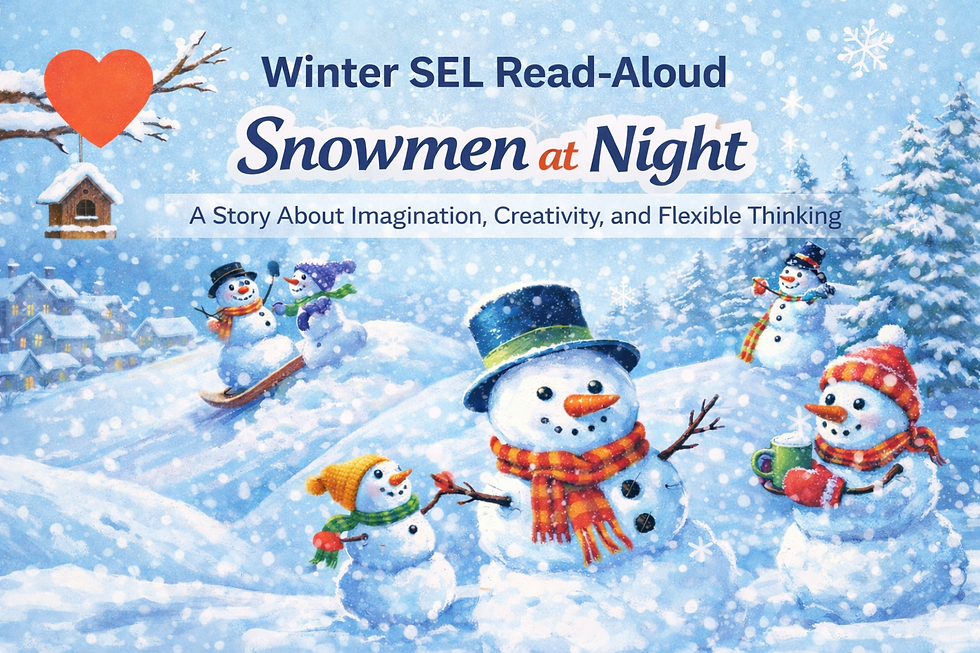
Winter is a season filled with wonder. Snow-covered yards or chilly air, quiet nights, and long evenings naturally invite imagination — especially for children. While many winter books focus on emotions or cooperation, imagination itself is a powerful social-emotional learning (SEL) skill that often gets overlooked.
In the final book of our Winter Books for SEL & Character Education series, we explore Snowmen at Night by Caralyn Buehner. This playful, imaginative winter picture book invites children to wonder what snowmen do when no one is watching — and in doing so, it supports creativity, flexible thinking, emotional expression, and joy.
This book is the perfect way to close out a winter SEL series because it reminds children (and adults) that imagination is not just fun — it’s essential for emotional growth.
What Is Snowmen at Night About?
Snowmen at Night by Caralyn Buehner is a winter picture book that imagines what snowmen do after dark, when children are asleep. Through playful illustrations and humorous scenarios, the book encourages creativity, imagination, and flexible thinking while celebrating joy, curiosity, and winter fun.
This story is a favorite winter read-aloud for preschoolers and elementary-age children.
Why Snowmen at Night Is Perfect for Winter SEL and Character Education
Imagination plays a critical role in social-emotional development. When children imagine possibilities, they practice perspective-taking, problem-solving, emotional expression, and flexibility.
Snowmen at Night gives children permission to think beyond what they see. There are no strict rules, no right answers, and no single way to imagine the story. This freedom supports emotional safety and creative confidence — two key components of SEL.
During winter, when children may feel confined indoors or overwhelmed by routine changes, imaginative play becomes an important outlet. This book validates creativity as something joyful, meaningful, and shared.
Social-Emotional Learning Skills Supported by Snowmen at Night
Imagination and Creative Expression
At the heart of this book is imagination. Children are invited to think creatively about what snowmen might do when no one is watching. This open-ended thinking supports emotional expression and builds confidence in sharing ideas.
When children are encouraged to imagine freely, they learn that their thoughts and ideas matter — a foundational SEL belief.
Flexible Thinking and Open-Mindedness
Snowmen at Night promotes flexible thinking by presenting multiple possibilities rather than one fixed outcome. Snowmen might play games, have parties, or race through the snow — and every idea is valid.
Flexible thinking helps children adapt to change, manage frustration, and consider different perspectives. These skills are especially important during winter months when routines, schedules, and expectations often shift.
Joy, Playfulness, and Emotional Well-Being
Joy is an important — and often underestimated — component of social-emotional health. This book celebrates silliness, play, and delight without requiring a lesson to be “earned.”
By laughing, imagining, and wondering together, children experience emotional connection and positive affect, which supports resilience and well-being.
How Snowmen at Night Supports Learning at School
Teachers often use Snowmen at Night as a winter read-aloud because it naturally supports both SEL and academic learning. The book invites discussion, prediction, and creative storytelling, making it ideal for classroom settings.
In schools, this book supports:
Creative writing and storytelling
Flexible thinking and idea-sharing
Group discussion and respectful listening
SEL lessons on expression and imagination
Winter-themed literacy units
Because the story has no single “right answer,” it creates a low-pressure environment where all students can participate.
How Snowmen at Night Supports Families and Homeschool Learning
For parents and homeschool families, Snowmen at Night offers a refreshing break from structured lessons. It encourages creativity without worksheets and supports meaningful conversation through play.
Families appreciate this book because it:
Sparks imagination and laughter
Encourages storytelling together
Works well for mixed-age children
Supports emotional expression through play
It’s an excellent bedtime read or a cozy winter afternoon story that invites conversation long after the book is closed.
Snowman Theme Connection: Imagining What Comes Next
In our winter SEL series, the snowman has been a symbol of emotional growth.
The Snowy Day: noticing and slowing down
The Giving Snowman: kindness and compassion
The Biggest Snowman Ever: teamwork and cooperation
Snowmen at Night: imagination and flexible thinking
This final book brings the series full circle by reminding children that emotional growth also includes joy, creativity, and wonder.
Winter SEL Activity: Imagine the Snowmen at Night
This activity invites children — and family members — to practice imagination together, even in homes with only one child.
After reading Snowmen at Night, invite the child to imagine what the snowmen might do after dark. Encourage them to draw, dictate, or act out their ideas. Parents, caregivers, or siblings can join in by sharing their own ideas, modeling flexible thinking and creativity.
Ask open-ended questions like:
What do you think the snowmen do first?
Who are they with?
How do they feel while they play?
This activity reinforces imagination, emotional expression, and shared joy — all important SEL skills.
Winter Extension: Flexible Thinking Through “What If?”
To extend the learning, play a simple “What if?” game together.
Take turns asking imaginative questions such as:
What if snowmen could travel?
What if they felt tired or excited?
What if they worked together to solve a problem?
There are no wrong answers. The goal is to practice flexible thinking and creativity while strengthening connection.
Reflection Questions to Support SEL Growth
After reading Snowmen at Night, invite children to reflect through conversation or drawing:
What part of the story made you laugh?
What do you like to imagine when you play?
How does it feel when you get to be creative?
Why is imagination important?
How can creativity help when things feel hard?
These questions help children connect imagination to emotional well-being.
Character Education Takeaway
Snowmen at Night teaches children that imagination is valuable. It shows that creativity builds confidence, flexibility, and joy — all essential traits for emotional health and lifelong learning.
By honoring playful thinking, the book reinforces the idea that children don’t need to outgrow imagination to grow emotionally.
Final Thoughts: Why Snowmen at Night Completes the Winter SEL Series
If you’re building a winter SEL unit, snowman-themed learning series, or homeschool winter routine, Snowmen at Night is the perfect closing chapter.
It reminds children that social-emotional learning isn’t only about managing feelings or working together — it’s also about joy, creativity, and wonder.
Disclosure: This post contains affiliate links. If you purchase through these links, Inspire, Guide & Nurture may earn a small commission at no extra cost to you. We only recommend books and resources we genuinely love and use to support social-emotional learning at home and in classrooms.


Comments