
Work-Life-School Balance: 7 Tips for Homeschooling Parents to Avoid Burnout
Updated: Jan 4
Discover 7 powerful tips for work-life-school balance and how homeschooling parents can avoid burnout with practical, heartfelt strategies.
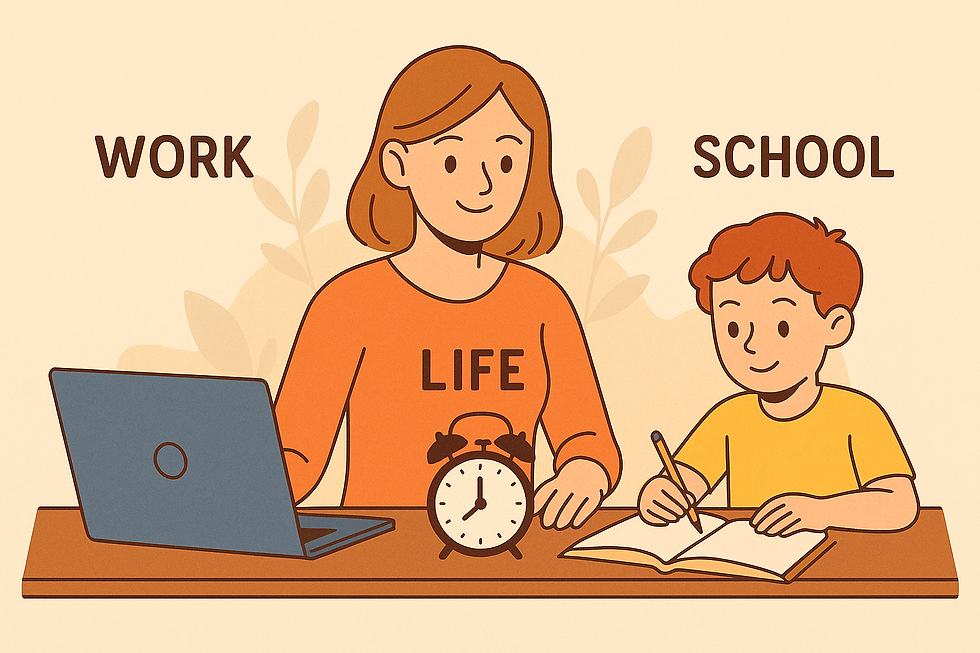
Are You Carrying Too Much?
Have you ever paused—midway through a spelling lesson or while reheating your coffee for the third time—and wondered, “How am I supposed to do all of this?”
Homeschooling is a beautiful choice. It’s rooted in deep love, intention, and a desire to offer your child something meaningful. But it can also feel like a three-ring circus—where you are the ringleader, the clown, and the audience, all before lunch.
You are teaching phonics while checking work emails. Folding laundry while reviewing fractions. Planning meals, managing emotions, refereeing sibling battles, and somewhere in there… trying to stay sane.
Burnout doesn’t arrive with flashing lights. It creeps in subtly—through the tension in your shoulders, the rising irritability, the whispered guilt that says you are not doing enough, even when you are doing everything.
The good news? Burnout is not a parenting failure—it’s a signal. A sign that something needs care. And often, it starts with you.
Let’s explore seven nurturing, doable tips to help you restore the balance between work, life, and school—so you can homeschool from a place of peace, not pressure.
✅ 1. Define Your Family’s “Enough”
What It Means
Defining your family’s “enough” means tuning out external expectations and tuning into what actually matters in your home. It’s about honoring your own values, season of life, and energy levels.
Why It Matters
Trying to live up to rigid schedules or unrealistic Pinterest-perfect ideals is one of the quickest ways to burn out. Children feel it, too. When expectations exceed capacity, learning becomes tense, not joyful.
How to Apply It
Reflect on your core homeschool values: Is connection more important than curriculum? Are life skills and emotional growth equally valid learning outcomes?
Choose 2–3 priorities per day: Maybe that’s math, reading, and outside time. That’s enough.
Let go of guilt for what doesn’t fit: You are not behind; you are honoring what is real.
Example: A mom of three let go of a rigid curriculum and focused on three anchors: morning read-alouds, outdoor exploration, and storytelling. Her kids blossomed—because she did, too.
Why It Works
Defining “enough” builds self-awareness, models balance, and nurtures emotional regulation. According to SEL research, children thrive when adults model prioritization and stress management.
✅ 2. Create Predictable Rhythms, Not Rigid Routines
What It Means
Rhythms are flexible patterns that guide the day. Unlike rigid routines, they leave room for real life—sick days, spontaneous learning, and emotional needs.
Why It Matters
Predictability builds emotional safety. Children (and adults) feel less anxious when they know what to expect next. It also reduces power struggles and decision fatigue.
How to Apply It
Create a simple flow:
Morning – Breakfast, learning block
Midday – Lunch, rest
Afternoon – Outdoor play, creative time
Use visual schedules or rhythm cards for younger children
Adjust based on energy, not the clock
Example: A homeschooling dad added a daily “dance break” after math. It became a rhythm his son looked forward to—and a transition cue that worked better than reminders.
Why It Works
Rhythms reduce cortisol spikes, support executive function, and provide stability without rigidity. According to Dr. Tina Payne Bryson, co-author of The Whole-Brain Child, routines help integrate both emotional and logical parts of the brain.
✅ 3. Build in Breaks for Everyone (Yes, You Too)
What It Means
Breaks are not optional—they are brain maintenance. You are not a machine, and neither are your kids.
Why It Matters
Without breaks, learning quality declines, frustration rises, and regulation skills drop. Breaks reset the nervous system and allow for emotional and cognitive recharge.
How to Apply It
Use the 25/5 model: 25 minutes focused work, 5-minute brain break
Let kids choose: bounce a ball, stretch, color, drink water
Model it yourself: take a mindful pause, even if it’s 2 minutes of silence
Example: One mom calls her solo bathroom trip a “staff meeting.” Her kids now respect it like a school bell.
Why It Works
Breaks support attention span, memory, and emotional regulation. According to Harvard’s Center on the Developing Child, self-regulation improves when children experience predictable rest periods.
✅ 4. Practice “Good Enough” Meals and Messes
What It Means
Perfection is not required. You can nourish your family and maintain your space without gourmet meals or a spotless house.
Why It Matters
Trying to “do it all” in every area leads to overwhelm. Letting go of control in lower-priority zones creates margin for presence and peace.
How to Apply It
Rotate 5 simple meals weekly (yes, grilled cheese counts)
Let kids clean their way (messy is okay)
Keep one “reset zone” tidy and let the rest ebb and flow
Example: A homeschooling mom gave up folding towels. Her kids’ “roll-and-stuff” method worked—and saved her 30 minutes each week.
Why It Works
Accepting imperfection builds resilience, flexibility, and family cooperation. These are key competencies in both conscious parenting and SEL.
✅ 5. Keep a Grown-Up Identity Outside Homeschooling
What It Means
You are a whole person—not just a parent or educator. Holding space for your interests isn’t selfish—it’s essential.
Why It Matters
When your identity is fused with homeschooling, burnout happens faster. Reclaiming your “you-ness” increases joy and models healthy self-worth for your children.
How to Apply It
Claim 15–30 minutes each day for something you enjoy: writing, crafting, reading, walking
Say yes to the library alone or a coffee with friends
Let your kids see you enjoying something that’s not about them
Example: A parent practiced piano during quiet time. Eventually, her kids joined. It became a daily moment of shared joy—not just “instruction.”
Why It Works
SEL research shows that modeling self-care enhances empathy and self-awareness in children. Your fulfillment fuels the whole home.
✅ 6. Talk About Feelings—Yours and Theirs
What It Means
Social-emotional learning starts at home. When you talk openly about emotions, you help children build vocabulary, empathy, and resilience.
Why It Matters
When emotions stay unnamed, they often come out sideways—through resistance, tantrums, or withdrawal. Talking builds trust and teaches kids they are safe to feel
How to Apply It
Use “I feel…” language: “I feel tired and need quiet for a few minutes.”
Use emotion cards or a mood meter daily
Normalize mistakes: “I got frustrated today. Next time I will take a breath before reacting.”
Example: After a hard morning, a dad shared that he was feeling overwhelmed. His son brought him his blanket and said, “You can use the calm corner too.”
Why It Works
According to CASEL, emotional literacy is a foundational SEL competency. It reduces conflict and builds connection. And when children see you model it, they learn faster.
✅ 7. Remember: This Is a Season, Not a Test
What It Means
Homeschooling is not a constant report card. It’s a journey through changing seasons. Some are calm and golden. Others feel stormy and uncertain. Neither defines your worth—or your child’s.
Why It Matters
Seeing homeschooling as fluid and flexible reduces anxiety and perfectionism. It frees you from needing every day to be “productive” and helps you embrace presence over performance.
How to Apply It
Reflect weekly: What worked? What needs shifting?
Give grace during hard seasons—illness, grief, transition
Celebrate tiny wins. Learning happens in the small moments too.
Example: A parent once asked her child what they loved most about homeschool. The answer? “The days we read under the blanket fort.” Not the math. Not the schedule. Just the togetherness.
Why It Works
This mindset shift supports long-term resilience, healthy stress management, and growth mindset—both for you and your child.
Final Thought: You’re Allowed to Be Human
Balance isn’t a perfectly weighted scale. It’s a dynamic rhythm that shifts with the day, the season, and your needs. You are not supposed to have it all figured out—you are supposed to stay connected, curious, and compassionate.
So here is your next small step:
Pick one tip from this list. Try it gently. See what shifts. Then come back when you are ready for the next.
✨ Looking for support tools? Explore our Conscious Parenting & Teaching training, our shop for resources, and our 1:1 coaching sessions to see if they are a fit for you.
You’ve got this. And we are cheering you on.


Comments